
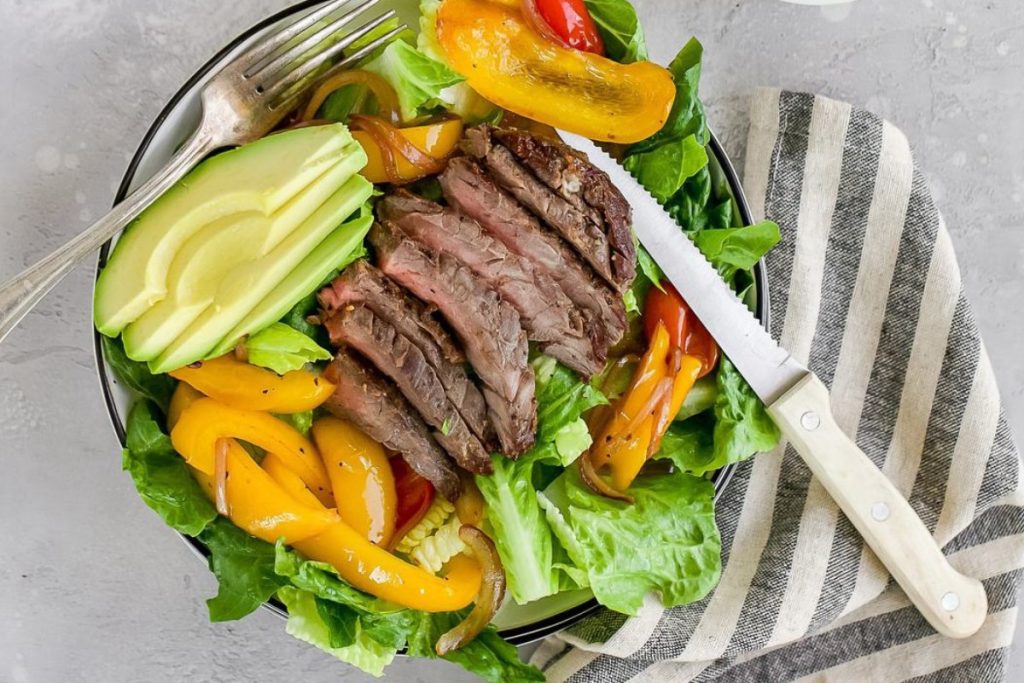
This Steak Fajita Salad is bright, fresh, and full of sizzling fajita flavor without feeling heavy. Tender flank steak sears beautifully in a cast-iron skillet and rests while a quick cilantro lime dressing comes together in the blender. Warm peppers, onions, and tomatoes add a soft char that pairs perfectly with crisp romaine and creamy avocado. It’s a colorful, satisfying salad that works for lunch or dinner and comes together with simple ingredients that deliver big flavor.
The term “diabetic-friendly” is used throughout this site to describe recipes that are lower in carbs and sugar. It is not intended to provide dietary advice or to indicate that a recipe is appropriate for every individual. Please review each recipe’s ingredients and nutrition information to ensure it aligns with your personal dietary needs and guidance.
Diabetic-Friendly Steak Fajita Salad
Ingredients
- 1/4 cup extra virgin olive oil divided
- 8 ounces flank steak
- Sea salt and black pepper to taste
- 2 tablespoons lime juice
- 1/2 cup cilantro
- 1 yellow bell pepper sliced
- 1/4 cup red onion sliced
- 1/2 cup cherry tomatoes halved
- 8 leaves romaine lettuce chopped
- 1 avocado sliced
Instructions
- Heat a cast-iron skillet over medium-high heat and add 1 tablespoon of olive oil.
- Generously season the flank steak with salt and pepper, then place it in the hot skillet.
- Cook for 10–15 minutes, flipping once halfway through, until it reaches your preferred doneness.
- Transfer the steak to a cutting board and let it rest for 10 minutes before slicing against the grain.
- Meanwhile, make the dressing by blending the remaining olive oil with the lime juice, cilantro, and a pinch of salt and pepper until smooth.
- Return the skillet to medium heat and add the bell pepper, red onion, and cherry tomatoes.
- Sauté for 3–5 minutes, until they soften and begin to char, then remove from heat.
- Divide the chopped romaine among serving plates.
- Add the sliced steak, sautéed vegetables, and avocado to each salad.
- Finish by drizzling the cilantro lime dressing over the top.
Nutrition
Nutritional Disclaimer: Please note that the nutritional information in this content is provided as a guideline only and should not replace professional medical advice. Consult with a healthcare professional to ensure that any dietary changes or nutritional guidelines are appropriate for your personal health needs.