
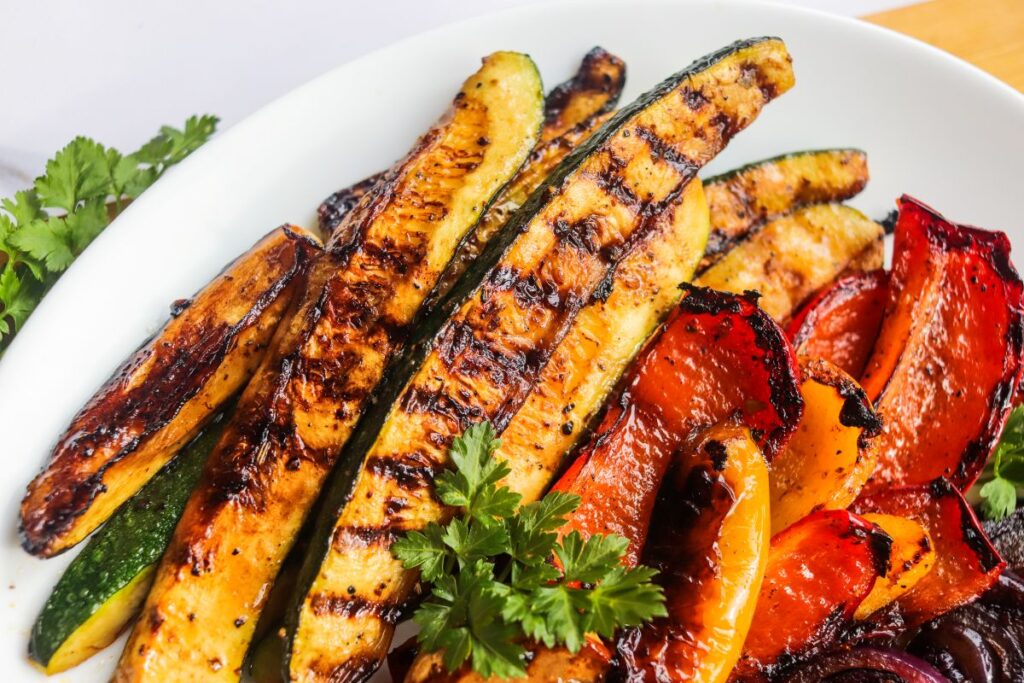
Grilled vegetables are one of those dishes that quietly pull everything together on a plate. They add color, texture, and depth without needing much attention once they hit the pan. This balsamic grilled vegetable recipe is the kind of side that fits just as easily into a casual weeknight dinner as it does into a more intentional meal, and it works across seasons depending on what you have on hand.

The term “diabetic-friendly” is used throughout this site to describe recipes that are lower in carbs and sugar. It is not intended to provide dietary advice or to indicate that a recipe is appropriate for every individual. Please review each recipe’s ingredients and nutrition information to ensure it aligns with your personal dietary needs and guidance.
What makes this version especially useful is how adaptable it is. It can stand alone as a warm vegetable dish, be layered into bowls, tucked into wraps, or served alongside protein. The balsamic brings brightness and contrast, while grilling adds that lightly charred flavor that makes simple vegetables feel complete.
How Balsamic Changes the Flavor of Grilled Vegetables
Balsamic vinegar does more than add acidity. When heated, it softens and concentrates slightly, giving the vegetables a deeper, more rounded flavor. Paired with olive oil and garlic, it creates a light coating that clings to the vegetables without weighing them down.
Grilling also plays an important role here. High heat encourages caramelization on the edges, which brings out natural sweetness and adds texture. This combination of tangy balsamic and gentle char is what gives the dish its balance and keeps it from tasting flat.
Getting Even Texture When Grilling Mixed Vegetables
Different vegetables cook at different speeds, which matters when everything goes onto the grill together. Onions and bell peppers take longer to soften, while zucchini and mushrooms cook more quickly. Starting with the slower vegetables and adding the faster ones shortly after helps everything finish at roughly the same time.
Keeping the vegetables in a single layer is another key detail. Overcrowding traps steam and prevents proper browning. Working in batches takes a little longer, but it produces far better texture. If the pan starts to feel dry, brushing lightly with extra oil mixed with a splash of balsamic helps maintain moisture without washing away flavor.

Making This Dish Work for Weeknights or Meal Prep
This recipe is flexible enough to fit different schedules. You can grill everything fresh in one go, or prep the vegetables and marinade ahead of time so they are ready to cook when you are. Leftovers also reheat well, which makes this a practical option for meal prep.
Because the flavor is not overpowering, these vegetables can be repurposed throughout the week. They work warm or at room temperature, which makes them easy to add to lunches without reheating.
Ingredient Substitutions for Balsamic Grilled Vegetables
This recipe is designed to be adaptable based on what you have available. Swapping vegetables or herbs will not change the overall structure, as long as you keep a balance of softer and firmer vegetables.
Here are a few simple substitution ideas to help you customize it.
- Yellow squash can replace zucchini
- Green bell pepper can be used instead of red or yellow
- Shallots can replace red onion for a milder flavor
- Fresh oregano or thyme can replace dried Italian herbs

What to Eat With Diabetic-Friendly Balsamic Grilled Vegetables
These vegetables pair easily with a wide range of main dishes. Because they are savory with a touch of brightness, they work best alongside simple proteins or grain-free bowls.
Here are a few common ways to serve them.
- Alongside chicken, steak, or fish
- Added to cauliflower rice or low carb bowls
- Wrapped into low carb tortillas or lettuce wraps
- Served with eggs for a savory breakfast or brunch plate
How to Store and Reheat Grilled Vegetables
Store leftover vegetables in an airtight container in the refrigerator. They will keep well for several days. To reheat, warm gently in a skillet over medium-low heat or in the oven until heated through. These vegetables can also be enjoyed cold or at room temperature, which makes them convenient for packed lunches or quick meals.
Diabetic-Friendly Balsamic Grilled Vegetables
Ingredients
- 2 medium zucchinis cut into bite sized pieces
- 1 red bell pepper cut into bite sized pieces
- 1 yellow bell pepper cut into bite sized pieces
- 1 large red onion cut into wedges
- 8 ounces mushrooms halved
- 1/4 cup balsamic vinegar
- 2 tablespoons olive oil plus more for brushing if needed
- 2 garlic cloves minced
- 1 teaspoon dried Italian herbs
- Salt and pepper to taste
- Fresh herbs for garnish optional
Instructions
- Place the zucchini, red and yellow bell peppers, red onion, and mushrooms in a large bowl.
- In a small bowl, whisk together the balsamic vinegar, olive oil, minced garlic, Italian herbs, salt, and pepper. Pour the mixture over the vegetables and toss until evenly coated. If time allows, let the vegetables marinate for about 30 minutes for deeper flavor.
- Heat a grill pan over medium-high heat until hot.
- Arrange the vegetables in a single layer on the pan, working in batches if needed to avoid overcrowding.
- Grill for about 3 to 4 minutes per side, turning occasionally, until the vegetables are tender and have light grill marks.
- If the vegetables begin to stick or feel dry, lightly brush with additional olive oil mixed with a small splash of balsamic vinegar.
- Transfer the grilled vegetables to a serving dish, adjust seasoning with salt and pepper if needed, and garnish with fresh herbs if using.
Nutrition
Nutritional Disclaimer: Please note that the nutritional information in this content is provided as a guideline only and should not replace professional medical advice. Consult with a healthcare professional to ensure that any dietary changes or nutritional guidelines are appropriate for your personal health needs.