

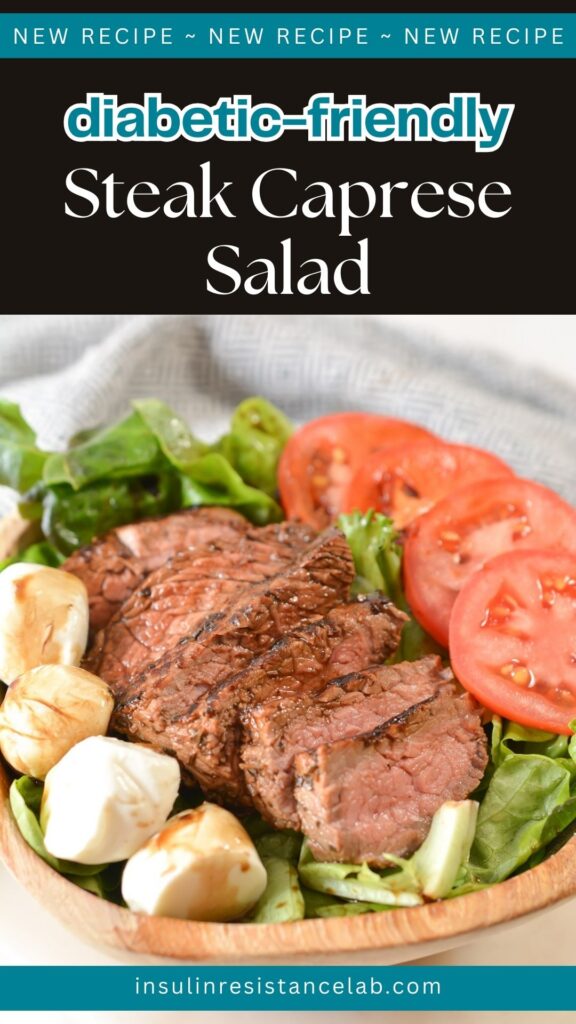
A good steak salad should feel like a full meal, not an afterthought. This steak Caprese salad brings together warm, sliced sirloin with fresh mozzarella, tomatoes, and crisp greens for something that feels balanced and complete. It works just as well for a quick dinner as it does for a meal that feels a little more put together.

The term “diabetic-friendly” is used throughout this site to describe recipes that are lower in carbs and sugar. It is not intended to provide dietary advice or to indicate that a recipe is appropriate for every individual. Please review each recipe’s ingredients and nutrition information to ensure it aligns with your personal dietary needs and guidance.
The combination of warm steak and cool salad ingredients creates contrast without complication. The flavors are straightforward and familiar, which makes this recipe easy to repeat and easy to serve.
Why Steak Works So Well in a Fresh Salad
Steak adds depth and substance to a salad. When it is sliced thin after resting, it stays tender and distributes evenly across the greens. This makes each bite feel balanced instead of leaving all the protein in one spot.
Using sirloin keeps the texture firm without being overly fatty. A quick sear over medium-high heat creates a flavorful exterior while keeping the inside cooked to your preference.
How the Marinade Builds Simple Flavor
The marinade in this recipe adds seasoning without overpowering the steak. Coconut aminos, lemon juice, and Worcestershire sauce create a savory base, while dried basil and garlic powder round it out.
Letting the steak marinate allows the surface to absorb flavor before cooking. Even a short marinating time improves the final result and keeps the seasoning evenly distributed.

Balancing Warm and Fresh Elements
The key to a good steak salad is timing. Letting the steak rest before slicing keeps the juices inside and prevents the greens from becoming soggy. Once sliced, the steak can be layered over the greens without wilting them too much.
The mozzarella and tomato add freshness and texture. A light drizzle of balsamic vinegar finishes the salad without overwhelming the other ingredients.
Ingredient Substitutions for Steak Caprese Salad
This recipe is simple and adapts easily as long as the balance between protein and fresh ingredients remains intact.
- Flank steak can replace the sirloin tip steak
- Arugula can replace the lettuce greens
- Fresh basil leaves can replace the dried basil in the marinade
- Cherry tomatoes can replace the sliced tomato
What to Serve With Steak Caprese Salad
This salad stands well on its own, but it pairs nicely with light additions if you want to round out the meal.
- Grilled vegetables
- A small cup of soup
- Roasted asparagus
- Low carb bread or crackers
How to Store and Reheat
If preparing ahead, store the cooked steak separately from the greens. Reheat the steak gently before slicing and assembling. The salad components are best assembled fresh to maintain texture.

Diabetic-Friendly Steak Caprese Salad
Ingredients
- 1 pound sirloin tip steak
- 2 tablespoons coconut aminos or no soy sauce
- 1 tablespoon lemon juice
- 1 teaspoon Worcestershire sauce
- 1/2 teaspoon dried basil
- 1/4 teaspoon garlic powder
- 8 cups lettuce greens
- 1 small tomato thinly sliced
- Bite sized mozzarella balls divided into 4 servings
- 1 tablespoon balsamic vinegar
Instructions
- In a bowl, mix together the coconut aminos, lemon juice, Worcestershire sauce, dried basil, and garlic powder.
- Add the steak to the bowl and turn it to coat evenly. Let it marinate for at least 30 minutes.
- Heat a skillet over medium-high heat. Sear the steak on both sides until it reaches your preferred level of doneness.
- Remove the steak from the pan and let it rest for about 10 minutes.
- Slice the steak thinly against the grain.
- Divide the greens among four plates. Top each with sliced steak, tomato, mozzarella, and a light drizzle of balsamic vinegar.
- Serve immediately.
Nutrition
Nutritional Disclaimer: Please note that the nutritional information in this content is provided as a guideline only and should not replace professional medical advice. Consult with a healthcare professional to ensure that any dietary changes or nutritional guidelines are appropriate for your personal health needs.